Build a Fish-Friendly Catch-and-Release Kit
- What belongs in a catch-and-release fishing kit?
- Start with a pre-trip rules card
- Build the universal core kit
- Choose hooks and tackle for the fishery
- Choose a landing system that fits the fish
- Stage hook-removal tools where you can reach them
- Keep measuring and photography subordinate to release
- Add conditional gear for depth and environment
- Use the kit in a fixed release sequence
- Reset the kit after every trip
What belongs in a catch-and-release fishing kit?
A fish-friendly catch-and-release kit starts with tackle strong enough to land the intended fish without exhaustion. Add fishery-appropriate hooks, a wet soft knotless or rubber net when a net is suitable, long-nose pliers, a dehooker, line cutters, wet measuring equipment, and any legally required descending or release device. Keep every release tool reachable before the cast.
This is not one universal shopping list. Species, water temperature, depth, hooking location, handling, air exposure, predators and release method all affect outcomes. NOAA Fisheries says releasing a fish does not guarantee that it will survive. Build the core kit first, then add the tools required for the exact water, species and method.
Start with a pre-trip rules card
Before fishing, confirm the current license, season, closed areas, species identification, size and possession limits, mandatory release rules, hook type, bait and tackle restrictions, protected-species rules and reporting obligations. Neighboring waters can have different rules, and emergency changes can occur during a season.
Save official identification material and regulations offline. Write the key release requirements on a small waterproof card or phone note: species that must remain in the water, legal hook pattern, size-measurement method, reporting requirement, and whether a descender is required. If identification is uncertain, follow the local agency's instructions and release promptly when lawful.
Freshwater advice does not automatically transfer to reef fish, sharks, sturgeon or protected species. Deep-water marine fisheries may require barotrauma planning. Large, toothy, spined or powerful fish need species-specific handling and personal protective equipment.
Build the universal core kit
The following items cover the release sequence for many ordinary freshwater and coastal trips:
- Rod, reel, line, leader and knots matched to the intended fish and conditions.
- Legal hooks selected for the fishery, with spares stored securely.
- A landing net with wet soft knotless mesh or rubber, if netting is appropriate.
- Long-nose pliers or hemostats sized for the hooks.
- A dehooker that can work while the fish remains in the water.
- Line or leader cutters that can cut the actual material cleanly.
- A wet measuring board, cradle or other fishery-approved measuring tool.
- Tool tethers where a dropped item would create litter or delay release.
- A first-aid kit and protective equipment suited to the species and setting.
NOAA's current catch-and-release best practices also recommend non-stainless-steel hooks because they can corrode if a hooked fish or other animal escapes before it can be dehooked. Hook material, pattern and barb rules remain fishery-specific.
Lay the kit out at home and rehearse the order: net, stabilize, dehook or cut, measure only if required, then release. Practice using the pliers, dehooker and cutters on unbaited tackle. Confirm that the cutters work on the heaviest leader you will carry.
Choose hooks and tackle for the fishery
Use equipment with enough power to land the expected fish quickly. Tackle that is too light can prolong the fight and exhaust the fish. Replace abraded leader, damaged hooks and unreliable knots before fishing.
NOAA lists circle hooks, barbless hooks and hooks with crimped barbs among catch-and-release options, and notes that some fisheries require circle hooks. The National Park Service also recommends appropriately sized single barbless hooks in its general guidance. Neither recommendation overrides a local rule or a species-specific method.
Choose the mandated or officially recommended hook for the water, bait and target. Do not convert every rig to the same hook style without checking. If a fishery permits a crimped barb, flatten it fully at home and check that the point remains sound. If a trip uses bait, review local guidance on deep-hooking risk and attend the rod closely.
Pair the release kit with a rod selected through show-floor comparison. Test the complete rod-and-leader system rather than buying a release tool as an isolated accessory.
Choose a landing system that fits the fish
For fish that need a net, select a frame large enough to receive the expected catch without folding its body. NOAA says wet soft knotless mesh or rubber causes less damage to eyes, fins, scales and protective mucus than rough netting. Wet the net before contact and clear old hooks or debris from it.
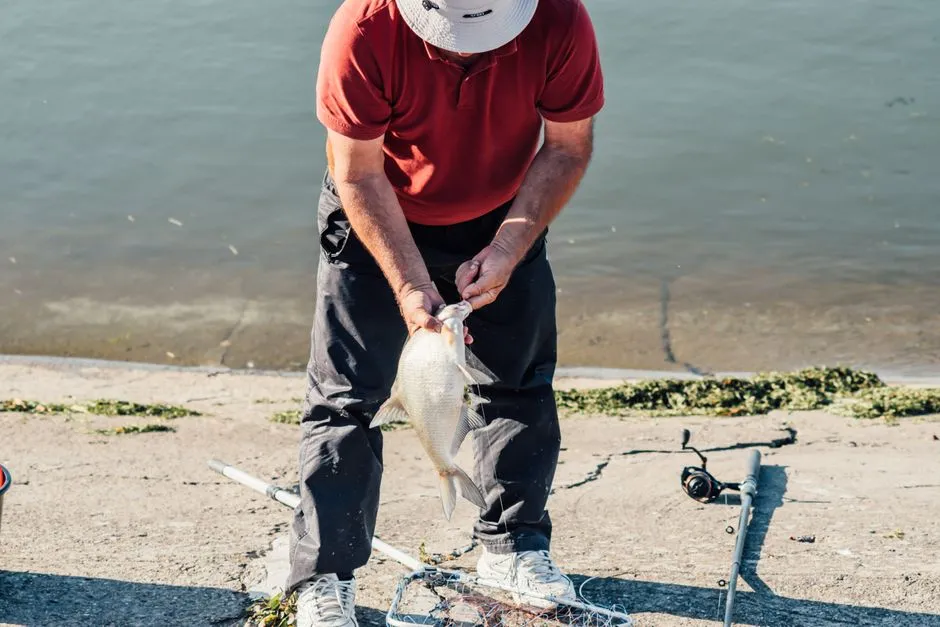
Keep the fish supported by water or the net while removing the hook. If it must be lifted briefly, support its weight along the body. Do not suspend a fish vertically by the jaw unless current species-specific official guidance expressly permits that method and tool. Never gaff a fish you intend to release.
Not every species should be netted, tailed, lipped or cradled in the same way. Obtain fishery-specific training before targeting animals whose teeth, spines, size or protected status make ordinary handling unsuitable.
Stage hook-removal tools where you can reach them
Put the pliers, dehooker and cutters in fixed positions on a vest, boat or bank bag. They should be reachable with one hand without opening a buried tackle tray. Secure loose hooks and keep the working area clear of other people.
Dehook the fish in the water whenever possible. If a swallowed hook cannot be removed easily, NOAA and NPS advise cutting the line as close to the hook as possible. Do not carry out invasive removal that adds handling or injury.
Human hook injuries need their own plan. MedlinePlus says a hook embedded deeply, in a joint or tendon, or in or near an eye, eyelid or artery needs medical help right away. A fishhook in the eye is a medical emergency. Do not try to remove it or put pressure on the eye; go to the nearest emergency department. The current MedlinePlus fishhook guidance also advises medical follow-up if tetanus vaccination is not current or infection signs develop.
Keep measuring and photography subordinate to release
Prepare a wet measuring board, cradle or fishery-approved method before landing. Check whether the rule calls for total length, fork length or another measurement; use the exact agency method.
Handle the fish only with wet hands or wet gloves, avoid its eyes and gills, and keep it over water or a low safe surface. Do not set it on dry sand, rocks, grass, carpet, clothing or a hot deck. Those surfaces can damage protective mucus, scales, fins and tissue.
NOAA advises minimizing air exposure and says less than 60 seconds is ideal when removal is necessary. That is a ceiling to stay under, not time reserved for photographs. Skip the picture when a fish is struggling, deeply hooked, unusually warm or slow to recover. If a photograph is planned, have the camera ready before the fish is lifted.
Add conditional gear for depth and environment
Fish brought from depth can experience barotrauma, a pressure-related injury that can prevent them from descending. NOAA lists bulging eyes, a protruding stomach, a bloated middle, sluggish swimming and lifted scales among possible signs. Its national guidance says fish caught deeper than 30 feet will generally show some effects, while the Southeast reef-fish material uses different decision thresholds and circumstances. Follow the guidance for the actual fishery.
Where required or recommended, carry a legal species-appropriate descending device, release weight or basket. Rig the device with the correct line and enough weight before fishing, and learn how to deploy it. NOAA's Return 'Em Right overview is specifically about Southeast U.S. reef fish; it is not a universal freshwater protocol.
Rapid release at depth is the preferred response in NOAA's general guidance. Venting is invasive. Do not puncture a fish from a generic diagram or because an organ protrudes. Use venting only where it is legal, fishery-specific instruction supports it, and you have received the required training.
Add environmental protection for the angler too: legal flotation equipment for boats, eye protection when working near hooks or weights, and species-appropriate gloves where official guidance calls for them. These items do not change the fish-handling method.
Use the kit in a fixed release sequence
- Land efficiently. Use appropriate tackle and do not fight the fish to exhaustion.
- Keep it supported and wet. Use the prepared net or species-specific landing method. Do not gaff a fish intended for release.
- Remove or cut the hook. Work in the water when possible. If easy removal is not possible, cut the line close to the hook.
- Measure only when necessary. Use the official method and keep air exposure to a minimum.
- Address barotrauma when relevant. Use the trained, legal depth-release method for that fishery.
- Release in suitable water. Let the fish regain balance and swim away under its own power.
For a sluggish fish, NOAA advises facing it into clean current or moving it head-first through the water until it can maintain balance and swim away. Do not move it backward; water should pass over the gills in the normal direction. The NPS notes that calmer water may be safer for a weakened fish in a fast or turbulent river. Avoid prolonged revival in dangerously warm, polluted or predator-heavy surface water; use the current fishery's directions.
Record required catch or mortality information honestly. Catch-and-release is a management practice, not proof that no harm occurred.
Reset the kit after every trip
Rinse tools as appropriate for the material and water used, dry them fully, and inspect for corrosion, damaged cutting edges, seized hinges and degraded tethers. Replace damaged hooks and leader. Disinfect measuring and landing equipment when local aquatic-invasive-species rules require it.
Restock the kit in the same order so the dehooker and cutters remain immediately accessible. Review responsible tackle before the next trip, then check the current fishery rules again. The useful kit is the one built around a clear sequence: land efficiently, handle minimally, solve the hook, and return the fish under the best current guidance available.